
Start Your Application
Request Info
-
On-Campus Programs
-
On-Campus Programs
-
Online Programs
-
On-Campus Seminars
- Careers at CHCP
- Contact Us
- Blog
-
Exploring a new career as a pharmacy technician starts by building fundamental knowledge and skills that can help you thrive in the role. Choosing the right pharmacy tech program can help to provide the professional training you’ll need. Taking just 36 weeks to complete, The Pharmacy Technician Program at the College of Health Care Professions aims to prepare you for your career through education and hands-on training, each designed to help you develop the skills and attributes that can help you succeed. Subjects in the Pharmacy Technician Certificate Program include those such as receiving and confirming prescription orders, assembling medicines, and providing information to patients about medications.
Pursuing the education you need to start your allied healthcare career doesn’t have to be complicated. At CHCP, students have a variety of blended learning schedules at their fingertips, designed to help increase the accessibility of our programs. When you enroll in the on-campus Pharmacy Technician Certificate Program, you’ll have the option to choose from the following blended-learning program schedules at our McAllen, Dallas, Fort Worth, South San Antonio, or Houston Southwest campuses:
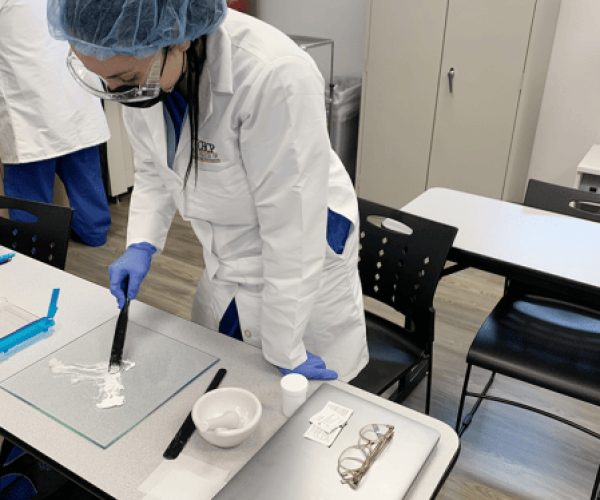
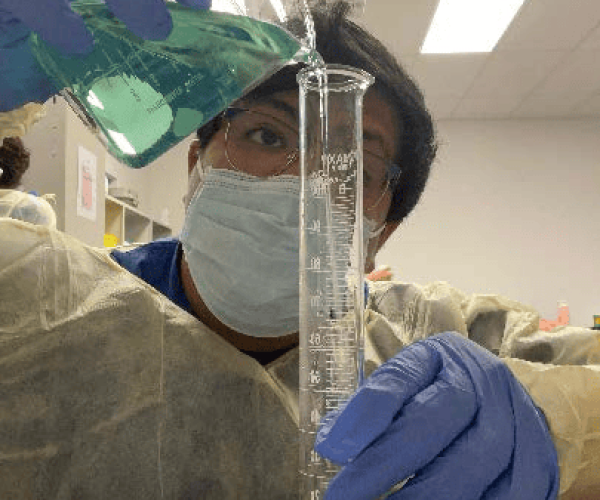
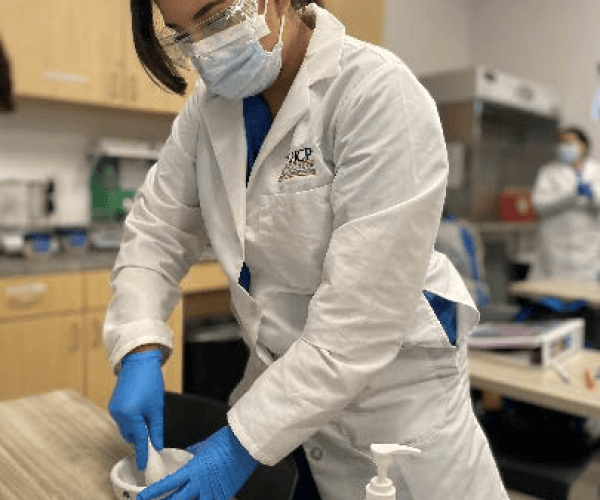
This blended learning approach, which comprises both online classes and in-person classes, allows you to learn pharmacology theory online while receiving the remaining hands-on medical training you need two or three days per week on campus. The on-campus CHCP Pharmacy Technician Lab is designed to emulate a real-world pharmacy environment, emphasizing working under pressure while providing exemplary customer service to patients.
Students can also choose to enroll in the online Pharmacy Technician Certificate Program, which spans 48 weeks and offers the flexibility of virtual learning.
Located across several major metropolitan cities in Texas, CHCP’s campuses offer students a way to explore in-person learning opportunities and lab sessions, curated to provide foundational experience for real-world applications as a pharmacy tech. The Pharmacy Technician Certificate Program is available at each of the following campuses:
Pharmacy technicians must be detail-oriented and organized because they handle and assemble various medications. They must also possess soft skills like interpersonal communication and emotional intelligence since they work directly with patients. In CHCP’s Pharmacy Technician Certificate Program, you will have the opportunity to develop the following skills:
For more information on the skills you’ll need, you can view our guide to the skill requirements and responsibilities of a pharmacy technician.
Students will become familiar with basic study and learning skills to include learning styles, goal setting, memorization techniques, reading comprehension, note taking, test taking, critical thinking, effective communication diversity, and technology. Prerequisite: None
| Lecture | 8 | hr. |
| Laboratory | 0 | hr. |
| Externship | 0 | hr. |
| Total Hours | 8 | hr. |
| Credits | 0.5 |
Students will learn about the Health Information Portability and Privacy Act (HIPAA). This course will identify rights for individuals and the processes that health care providers must implement to support individual rights. Students must demonstrate knowledge of the rules for the use and disclosure of information. Students will learn about transmission of disease, hand washing techniques and gloving. This course will ensure that students are aware of biohazards and airborne pathogens, including infection control procedures and laboratory safety. Students must demonstrate infection control procedures and laboratory safety. Prerequisite: None
| Lecture | 10 | hr. |
| Laboratory | 0 | hr. |
| Externship | 0 | hr. |
| Total Hours | 10 | hr. |
| Credits | 0.5 |
Students will learn and Identify basic structures, functions and dysfunctions of the body, as well as medical terminology, abbreviations and symbols that are necessary tools for building a medical vocabulary. This course covers general treatment of the sensory, skeletal and muscular, nervous, endocrine, digestive, respiratory, Circulatory, Urinary and reproductive, and integumentary systems. Prerequisite: None
| Lecture | 48 | hr. |
| Laboratory | 0 | hr. |
| Externship | 0 | hr. |
| Total Hours | 48 | hr. |
| Credits | 3 |
This course focuses on essential skills and responsibilities of the pharmacy technician, as they assist the pharmacist in direct patient care and retail pharmacy operations. Student will also learn about other pharmacy settings. Students will examine regulatory laws and agencies, as well as ethical issues for the pharmacy technician, patient safety, pharmacological terminology, and licensing and career requirements. This course will also focus on basic mathematics. Prerequisite: Module I
| Lecture | 88 | hr. |
| Laboratory | 8 | hr. |
| Externship | 0 | hr. |
| Total Hours | 96 | hr. |
| Credits | 5.5 |
This course focuses on essential skills and responsibilities of the pharmacy technician, as they assist the pharmacist in direct patient care and retail pharmacy operations. Student will also learn about other pharmacy settings. Students will examine regulatory laws and agencies, as well as ethical issues for the pharmacy technician, patient safety, pharmacological terminology, and licensing and career requirements. This course will also focus on basic mathematics. Prerequisite: Module I
| Lecture | 48 | hr. |
| Laboratory | 48 | hr. |
| Externship | 0 | hr. |
| Total Hours | 96 | hr. |
| Credits | 4.5 |
This course focuses on retail pharmacy operations. The student will be oriented in the everyday workplace dynamics of the pharmacy, with a focus on medication preparation, prescription interpretation and filling, data entry, billing and collection practices, student will utilize pharmacy software, patient education will also be reviewed. Students will also become familiar with over-the-counter drugs. Prerequisite: Module I
| Lecture | 48 | hr. |
| Laboratory | 0 | hr. |
| Externship | 0 | hr. |
| Total Hours | 48 | hr. |
| Credits | 4.5 |
The course examines dosage calculations, medication administration, and systems of measurement and conversion used in the pharmacy setting. General mathematics and common and specialized medication preparations are reviewed, such as apothecary, household, and metric systems. Students will develop accuracy and skill in reading and transcribing prescriptions and drug labels. Prerequisite: Module I
| Lecture | 64 | hr. |
| Laboratory | 32 | hr. |
| Externship | 0 | hr. |
| Total Hours | 96 | hr. |
| Credits | 5 |
This course focuses on procedures related to assisting the pharmacist in screening, authenticating and processing the physician’s medication orders. Students will also focus on techniques used to assist the pharmacist and prepare sterile and non-sterile compounds. Students will examine various aspects of pharmacy equipment, microbiology, pharmacology, and communication. Students will demonstrate knowledge and skills in the following areas of anatomy/physiology and pharmacology: Integumentary, ophthalmic, optic, nervous, the digestive, respiratory, reproductive, skeletal, and endocrine and muscular systems. Drug classifications, medications, drug actions, including responding to the emergency situations, and medication preparation for these systems are covered. Prerequisite: Module I
| Lecture | 72 | hr. |
| Laboratory | 24 | hr. |
| Externship | 0 | hr. |
| Total Hours | 96 | hr. |
| Credits | 5 |
This course explores the preparation and use of sterile compounds, parenteral medications, and intravenous admixtures, with a focus on general and specific IV procedures and the role of the pharmacy technician. Chemotherapeutic therapy and experimental drug trials are discussed. Students will demonstrate knowledge and skills in the following areas of anatomy/physiology and pharmacology: cancer and chemotherapy, fluids and electrolytes, anesthetics, nutrition. Prerequisite: Module I
| Lecture | 72 | hr. |
| Laboratory | 24 | hr. |
| Externship | 0 | hr. |
| Total Hours | 96 | hr. |
| Credits | 5 |
This course will teach the student about professionalism, including work-place behaviors that result in positive business relationships. Students will learn goal-setting, stress-management, time-management, professional dress, etiquette, diversity in the work place relationships, excellent customer service, communication at work, conflict management, job search skills, building resumes, and interview techniques. Prerequisite: Module I - VII
| Lecture | 30 | hr. |
| Laboratory | 18 | hr. |
| Externship | 0 | hr. |
| Total Hours | 48 | hr. |
| Credits | 2.5 |
This course provides a review of clinical skills and content learned throughout the program. Students will also prepare for certification examination. Prerequisite: Module I - VII
| Lecture | 15 | hr. |
| Laboratory | 15 | hr. |
| Externship | 0 | hr. |
| Total Hours | 30 | hr. |
| Credits | 1.5 |
This course provides students with work experience in a professional pharmacy setting. Students are required to complete the externship under the direct supervision of qualified pharmacy personnel. Prerequisite: Module I - VII
| Lecture | 0 | hr. |
| Laboratory | 0 | hr. |
| Externship | 180 | hr. |
| Total Hours | 180 | hr. |
| Credits | 4 |
Completion of the Pharmacy Technician Certificate Program gives students the opportunity to take either the Pharmacy Technician Certification Exam (PTCE) or the Exam for the Certification of Pharmacy Technicians (ExCPT) to become a Certified Pharmacy Technician (CPhT). Passing one of these certification exams is required to apply for registration as a pharmacy technician. For pharmacy technician certification, Texas students can take either the PTCE or the ExCPT, as both are honored by the Texas State Board of Pharmacy. Once you’ve become a Certified Pharmacy Tech, you’ll be able to apply for entry-level positions in the role. For more detailed information on certification options and how to become a pharmacy tech, you can visit our comprehensive guide to the pharmacy technician role.
The pharmacy technician career field is growing and is projected by the Bureau of Labor Statistics to grow by 6% by 2034. It is forecasted that pharmacy technicians will be in higher demand due to the likelihood that they may need to take on more pharmacological responsibilities, as pharmacists increasingly perform more patient care activities, like giving flu shots. To see more information on pharmacy technician job outlook visit the Bureau of Labor Statistics.
As a certified pharmacy technician, there are a multitude of different pharmacy settings you may work in, some of which include:
Ready to take the first step toward a new career as a pharmacy technician? To apply for the on-campus Pharmacy Technician Program at CHCP, fill out the application form with your preferred program, location, and contact information. Once submitted, a CHCP advisor will be in touch to help you explore your next steps. It’s important to note the following requirements must be met as prerequisites for admission into the program.
To become a pharmacy technician and be able to assist licensed pharmacists, you will need to complete a Pharmacy Technician Certificate Program and pass the certification exams. CHCP's program aims to prepare students for these exams, as well as equip them with the education and skills needed for a future career in a variety of pharmacy settings.
Under the supervision of a licensed pharmacist, pharmacy technicians assist in a variety of tasks including dispensing medication, helping and communicating with patients, managing a pharmacy's inventory, and data entry. Depending on the workplace, whether a clinic or long-term care facility, a pharmacy technician's role may change, but their primary job is to ensure the safe and effective delivery of healthcare services.
To receive a pharmacy technician license, you will first need to enroll in a certificate program. Students at CHCP can complete the Pharmacy Technician Certification Program in as few as 36 weeks. Once you graduate from the program, you will need to apply for your license and then pass a National Pharmacy Technician Certification Examination to be certified. CHCP gives students a variety of knowledge through coursework and hands-on experience in labs and externships to help prepare them for the exam.
The requirements for becoming a pharmacy technician can vary by state, so it's important to confirm the necessary certifications and education for your specific location. In the state of Texas, becoming a certified pharmacy technician requires the completion of a qualified program and passing the National Pharmacy Technician Certification Exam.
A formal degree is not always required for pharmacy technicians, though this can vary by employer. The most common path to becoming a pharmacy technician involves completing a qualified certificate program like the Pharmacy Technician Certificate Program at CHCP, and then passing the necessary certification exams for your state. Once these credentials are obtained, you can begin pursuing entry-level positions as a pharmacy technician in a variety of settings.
Disqualifications that can prevent someone from becoming a pharmacy technician can vary depending on the state and employer, and may be considered on a case-by-case basis. The following are common factors that may disqualify you from being a pharmacy technician.
A pharmacy technician has tasks they are allowed to perform and activities that are typically restricted. Tasks they are qualified to perform generally include medication dispensing, labeling prescriptions, managing a pharmacy's inventory, entering patient information, and assisting customers with purchasing over-the-counter medication. Tasks that they are generally not allowed to perform include making independent decisions on medication substitutions, counseling patients on medication side effects, providing clinical assessments of patient's health, and accepting new prescriptions without pharmacist review.
It is important to note that a majority of pharmacy technicians' tasks are done under the supervision of licensed pharmacists.
There are a variety of job opportunities as a pharmacy technician. Here are some of the workplaces that pharmacy technicians find themselves in:
You’ve done the research. You know pharmacy technicians are in high demand across Texas and that the role aligns with the…
Read More
If you’re ready to start a career in healthcare, exploring your education options is an essential first step. For aspiring…
Read More
Are you considering a career as a pharmacy technician but unsure of what it takes to get started? While you don’t necessarily…
Read More
What skills do you need to be a pharmacy technician? We're exploring the necessary qualities for a successful career in this patient-driven role.
Read More
If you’re ready to explore the exciting, fast-paced world of allied healthcare and need to find the right education, we’re here to help. As an ABHES Accredited Allied Healthcare College, we aim to guide and support students as they explore their options, taking their next steps toward a new career. To learn more about our certificate program offerings, stackable degrees, tuition resources, and professional outcomes, get in touch with one of our admissions advisors today.